

Kids Summer Camp Gymnastics That Builds Confidence
- Betty Arsenault
- 4 days ago
- 5 min read
Summer can feel very long when kids have energy to spare and the usual school routine disappears. The right kids summer camp gymnastics program gives that energy somewhere exciting to go: onto spring floors, through obstacle courses, into new skills, and toward the kind of confidence kids carry home with them.
For San Diego families, camp is not only about filling the calendar. It is a chance for children to move with purpose, meet new friends, try something that feels challenging, and have a whole lot of fun doing it. Gymnastics-based camp creates a high-energy environment where every child can find a starting point, whether they are learning their first cartwheel or already working toward stronger tumbling and tricking skills.
Why Kids Summer Camp Gymnastics Is Different
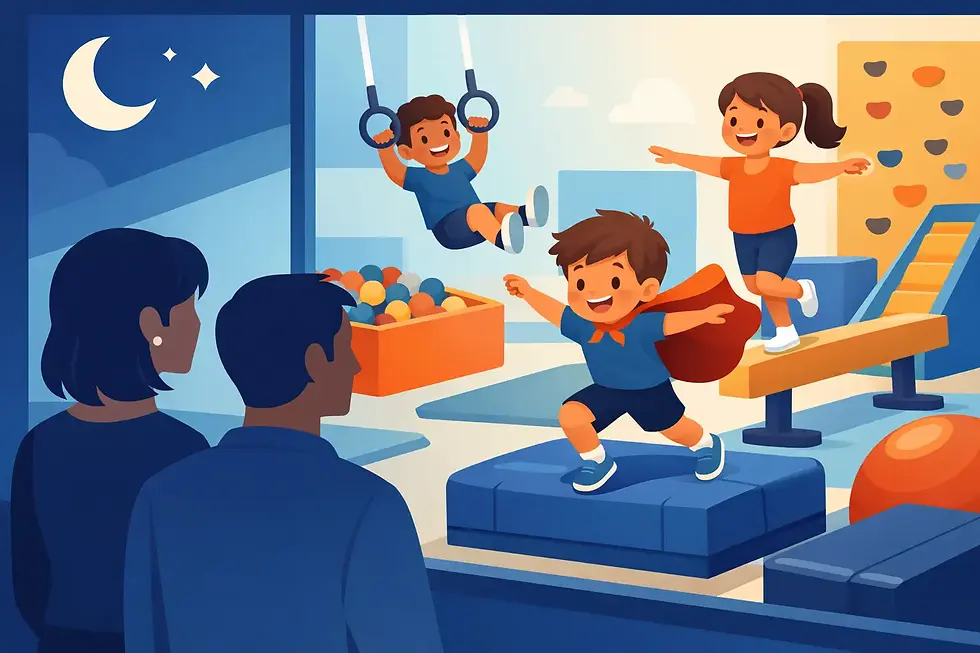
A great movement camp does more than keep kids busy. It gives them a place to build strength, agility, coordination, and body awareness through activities that actually feel like play. Kids might race through a ninja obstacle course in the morning, practice handstands and rolls after a snack break, and finish the day laughing with their group during a team challenge.
That variety matters. Some children light up when they are working on a gymnastics skill. Others gain confidence climbing, balancing, jumping, or figuring out how to make it through a new obstacle. By combining tumbling, ninja-style movement, tricking-inspired drills, games, and open gym-style activities, camp can help kids discover what they enjoy without asking them to choose one sport before they are ready.
It also offers a refreshing alternative to camps built around screens, sitting, or overly structured competition. Children still learn to listen, take turns, and follow directions, but they do it while moving. They learn that effort counts, that practice changes what their bodies can do, and that a missed landing is simply another chance to try.
The Skills Kids Build Beyond the Gym Floor
Parents often notice the physical changes first. Their child becomes stronger, more coordinated, or more comfortable running, jumping, and climbing. Those are meaningful wins, especially during a season when regular routines can slip. But the biggest growth at a quality camp often happens in the moments between the skills.
A child who was hesitant to swing on a bar may take a small step forward after watching a coach demonstrate the movement. A camper who falls during an obstacle challenge learns to reset and try again. A more experienced athlete may learn patience by encouraging a newer camper through a drill. These small moments build resilience, self-control, and confidence in a way that feels natural rather than forced.
Gymnastics and tumbling also develop body control that supports other activities. Kids who play soccer, baseball, dance, cheer, martial arts, or traditional gymnastics can benefit from better balance, flexibility, spatial awareness, and landing mechanics. For children who do not connect with team sports, a movement camp can be an especially welcome outlet because progress is personal. They do not have to score a goal or make a roster to feel successful.
What a Strong Camp Day Looks Like
The best camp days have a rhythm. Kids need enough structure to feel secure, enough variety to stay engaged, and enough coaching to make progress safely. A well-planned day may begin with warm-ups and movement games that get everyone ready to train. From there, campers rotate through skill stations, obstacle challenges, tumbling progressions, and group activities designed for their age and ability.
Coaches should break skills into manageable steps. Rather than asking a beginner to perform a big trick before they are ready, they build the foundations first: safe landings, shapes, rolls, balance, jumping technique, and strength drills. Advanced athletes need that same thoughtful progression, just with more challenging variations and opportunities to refine technique.
There should also be room for kids to be kids. Water breaks, snack time, games, and downtime help campers recharge. The goal is not to turn every moment into a drill. It is to create an active, supportive day where children feel excited to participate from drop-off through pickup.
Safety and Coaching Should Come First
High-energy activities are most fun when families can feel confident that their child is being supported. Look for a camp with trained instructors who understand how to teach movement to children, not simply how to perform skills themselves. Good coaching is clear, encouraging, and age-appropriate. It helps kids know what to do, why it matters, and how to make a safe choice when something feels new.
Equipment, supervision, and group organization matter too. Campers should be placed in activities that match their developmental level, with coaches actively managing stations and offering modifications when needed. Not every child should be doing the same version of a skill. A supportive gym recognizes that a strong foundation is more valuable than rushing toward a flip.
Parents can also ask practical questions before enrolling. How are campers grouped? What is the coach-to-camper ratio? Are beginners welcome? How are water breaks and snacks handled? What happens if a child needs extra encouragement or a quieter moment? The answers reveal whether a program is designed around real children and real families.
Choosing the Right Fit for Your Child
Not every summer camp needs to serve the same purpose. If your child is already passionate about gymnastics or cheer, a tumbling-focused camp may give them extra time to sharpen skills. If they love climbing, racing, and testing themselves on new challenges, ninja training may be the better draw. For many families, a blended camp is ideal because it keeps the day fresh while exposing kids to several types of movement.
Age and personality are worth considering, too. Younger campers often thrive with playful instruction, short activity blocks, and lots of positive reinforcement. Older kids and teens may enjoy more time working on goals, tricking progressions, or obstacle challenges that require strategy and grit. Beginners need a welcoming atmosphere where they can learn without feeling behind, while experienced athletes need coaches who can keep them challenged.
It depends on what your child needs most this summer. Some need an active outlet. Some need a confidence boost after a tough school year. Some simply want a place where they can run, flip, laugh, and make friends. The right camp meets them where they are and gives them room to grow.
How to Help Your Camper Have a Great Week
A little preparation can make the first day feel easier. Send your child in comfortable clothes that let them stretch, jump, and move freely. Pack a labeled water bottle, snacks or lunch as requested, and any camp-specific items provided in the registration details. Long hair should be tied back, and jewelry is usually best left at home for active training.
Just as helpful is the conversation before camp starts. Let your child know they do not need to arrive knowing every skill. Encourage them to listen to their coaches, try one new thing each day, and ask for help when they need it. Remind them that being brave does not mean never feeling nervous. It means taking the next safe step anyway.
At pickup, skip the pressure to hear a full report right away. A simple question such as, “What was the most fun thing you tried today?” often opens the door. You may hear about a new friend, a favorite obstacle, or a skill they want to practice again tomorrow.
At SD Trick + Flip, summer camp is built around that kind of joyful progress: expert coaching, active challenges, and a community where every camper can feel proud of what they are learning. Give your child a summer memory that starts with movement and grows into confidence, one safe jump, roll, climb, and trick at a time.


Comments