
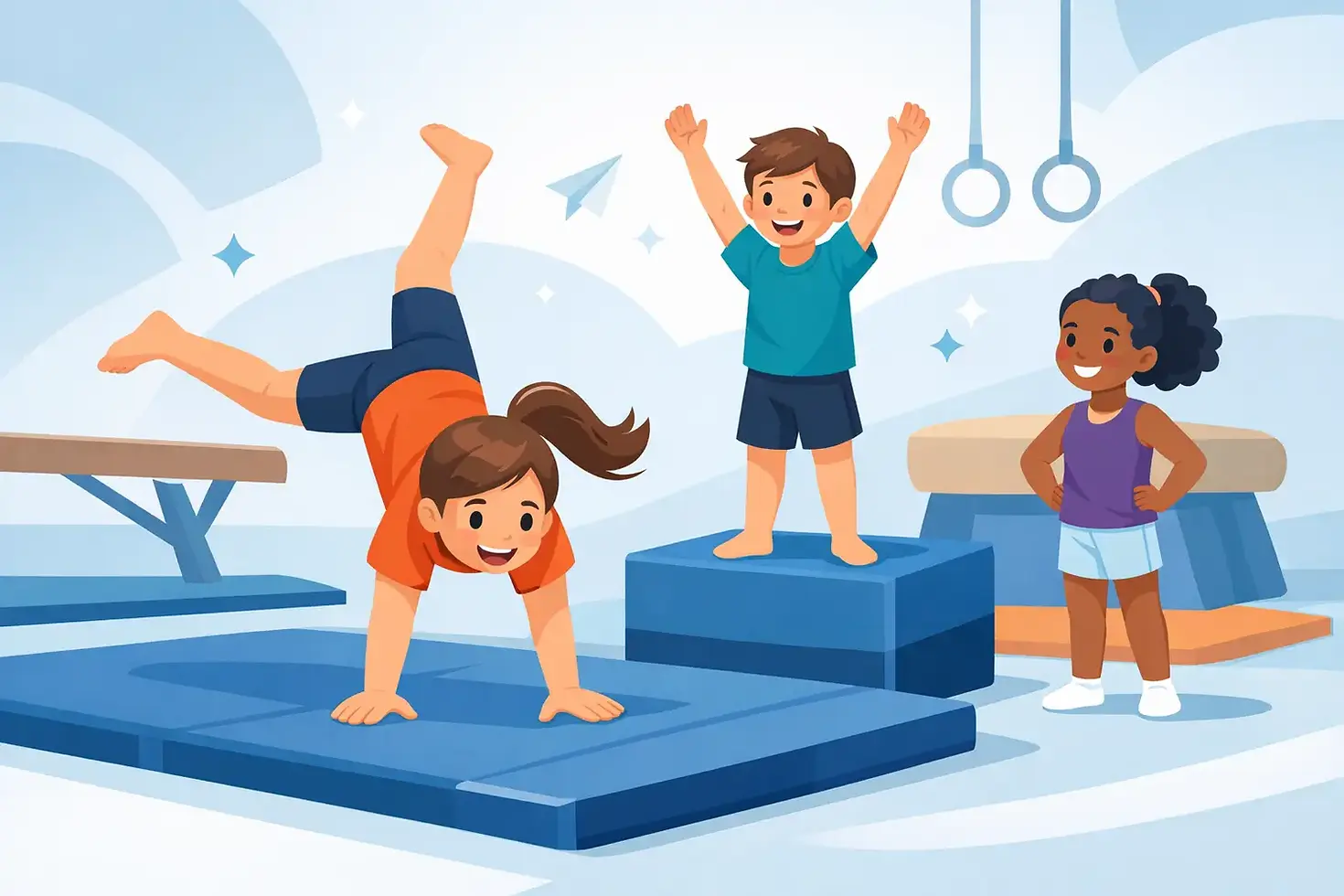
Kids Tumbling Classes That Build Real Confidence
A child who spends recess cartwheeling across the grass or practicing handstands against the living room wall is telling you something: they want to move. Kids tumbling classes give that energy a safe, structured place to grow. With skilled coaching, the right progressions, and plenty of encouragement, kids can turn a first shaky roll into stronger body control, real athletic skills, and pride in what their bodies can do.
For San Diego families, tumbling can be much more than a gymnastics activity. It is a foundation for cheer, dance, martial arts, tricking, ninja training, and everyday confidence. The best programs meet kids at their current level, whether they are brand-new to the gym or ready to refine a back handspring.
What Kids Learn Beyond Flips
A cartwheel may look simple from the sidelines, but it asks a child to coordinate their arms, core, legs, balance, timing, and focus. Tumbling develops those pieces through age-appropriate skills such as rolls, handstands, cartwheels, bridges, round-offs, and eventually more advanced progressions.
The real value is in the process. Kids learn to listen to coaching, repeat a movement with purpose, and handle the moment when a skill does not click immediately. That persistence carries over into school, sports, and other new challenges. Every small win matters: holding a handstand one second longer, landing with both feet together, or trying again after a wobble.
Tumbling also supports physical literacy. Children become more aware of where their bodies are in space, how to land safely, and how to generate power without losing control. Those abilities help young athletes feel more capable in nearly any activity they choose next.
Why Progression-Based Coaching Matters
Flips are exciting, and kids often arrive asking when they can learn one. A quality class does not rush that answer. Safe tumbling instruction builds the strength, shapes, landing mechanics, and confidence needed before a child moves to the next skill.
For example, a back handspring is not taught as one giant leap. A coach may first work on hollow-body shapes, bridges, handstand control, jump power, and backward movement drills. Each piece gives the athlete a safer, more confident pathway forward. When the full skill comes together, it feels earned instead of forced.
This is why expert instruction matters. Coaches should know how to break skills into manageable steps, offer appropriate spotting when needed, and adjust drills for different learning styles. Some kids respond to a clear visual demonstration. Others need a simple cue, extra repetitions, or a little more time before attempting a new progression.
The best environment is energetic without becoming chaotic. Kids should feel challenged, but never pressured to attempt a skill before they are ready. Confidence grows fastest when children know their coach sees them, supports them, and celebrates their effort alongside their results.
Choosing the Right Kids Tumbling Classes
Not every tumbling class will be the right match for every child. A beginner who is still learning to jump and land with control needs a different experience than an athlete training for cheer tryouts or working toward advanced flips. Look for a program that groups students by age, ability, or both, then gives each child a clear path for progress.
Class size matters, too. Kids need enough space to move and enough coach attention to receive feedback. A busy gym can still feel personal when instructors are organized, engaged, and actively teaching rather than simply supervising.
Parents should also pay attention to the training space. Appropriate mats, spring surfaces, skill stations, and well-maintained equipment help instructors teach safely and keep practice fun. A clean, welcoming facility sends an important message: children are expected to work hard here, but they are also cared for here.
Ask how the program handles beginners. The answer should not be, “They will figure it out.” A great class introduces fundamentals in a way that helps newcomers feel successful from day one. That might mean learning safe landing positions, practicing forward rolls down an incline, or building a cartwheel through simple drills before performing it independently.
Signs Your Child Has Found a Good Fit
You will often know a class is working by what happens after it ends. Your child talks about a coach’s encouragement, demonstrates a new shape at home, or asks when they can come back. They may be tired, but they are energized by their progress.
A good fit also leaves room for individuality. Some children love performing and want to be first in line. Others are more cautious and need time to watch before trying a new skill. Supportive coaches make room for both. The goal is not to make every athlete learn at the same speed. It is to help each child keep moving forward.
Tumbling for Beginners, Athletes, and High-Energy Kids
Tumbling is often a natural fit for children who do not connect with traditional team sports. There is still structure, discipline, and coaching, but progress is personal. A child can work toward their own skill goals while being part of a positive group.
For beginners, classes can provide a fun introduction to movement without the pressure of competition. They learn how to warm up, take turns, follow directions, and feel comfortable in a gym setting. Those first experiences can shape whether a child sees physical activity as something intimidating or something they genuinely enjoy.
For cheerleaders and dancers, tumbling can build the skills and confidence needed to add power and polish to routines. For martial arts and tricking athletes, it strengthens air awareness, kicking control, and the ability to connect movements with precision. For ninja athletes, it supports the jumping, landing, hanging, and body control needed for obstacles.
At SD Trick + Flip, that crossover is part of the fun. Kids can build a strong tumbling foundation while exploring movement in ways that match their interests, from gymnastics-based skills to ninja challenges and martial arts-inspired tricking.
The Confidence Parents Can See at Home
Parents usually sign up for a class because their child has energy to burn, wants to learn a cartwheel, or needs a healthy after-school activity. What they often notice later is bigger than the original goal.
A child who was hesitant to climb, jump, or try something unfamiliar may begin taking healthy risks. They may stand taller after class, speak more confidently about their accomplishments, or show more patience when practicing a difficult task. Tumbling gives kids repeated proof that improvement is possible.
That does not mean every class will be easy. There will be days when a skill feels frustrating or a child compares themselves to someone further along. The right coach helps reframe those moments. Progress is not about being the first athlete to get a skill. It is about showing up, learning the next piece, and recognizing that effort builds ability.
How to Support Your Young Tumbler
You do not need a home gym to support a child in tumbling. In fact, advanced skills should stay in the gym, where trained coaches and proper equipment are available. At home, the best support is simple: ask what they practiced, celebrate effort, and give them time to rest and recover.
Encourage your child to wear comfortable clothes that allow easy movement, bring water, and arrive ready to listen. If they are nervous, remind them that everyone starts somewhere. If they are eager to move ahead quickly, remind them that strong basics make advanced skills safer and more exciting later.
Most of all, let the experience belong to them. Kids thrive when they know their progress is noticed without feeling measured against someone else. One confident attempt, one cleaner landing, and one encouraging class at a time can become a powerful habit of believing, “I can learn this.”


Comments